PiVPN vs Tailscale (2026): The Question Is Whether You Can Open a Port
PiVPN gives you a classic VPN server on a Raspberry Pi and needs an inbound port. Tailscale needs none, and works behind CGNAT where PiVPN cannot. That single constraint decides most of these setups before any feature comparison starts.
By Eric Gerard · Founder · VPNSmith - Self-host VPN & GDPR VPS specialist··3 min read·Photo: Pexels
Share
Search for this comparison and you will find long feature tables. Most of them bury the one fact that decides the outcome for the majority of people, and it has nothing to do with features: can you open an inbound port on your internet connection?
If yes, both tools work and the choice is about what you want. If no, the comparison is over before it starts.
PiVPN builds a server. Clients dial in from outside, which requires a port reachable from the internet, which requires a public address of your own.
Tailscale never accepts an inbound connection. Both ends make outbound connections and a coordination server introduces them. Nothing on your router needs to change.
So the first question is not "which is better" but what does your ISP give you? If your router's WAN address falls between 100.64.0.0 and 100.127.255.255, you are behind carrier-grade NAT: there is no port to forward, and PiVPN cannot be reached from outside no matter how it is configured.
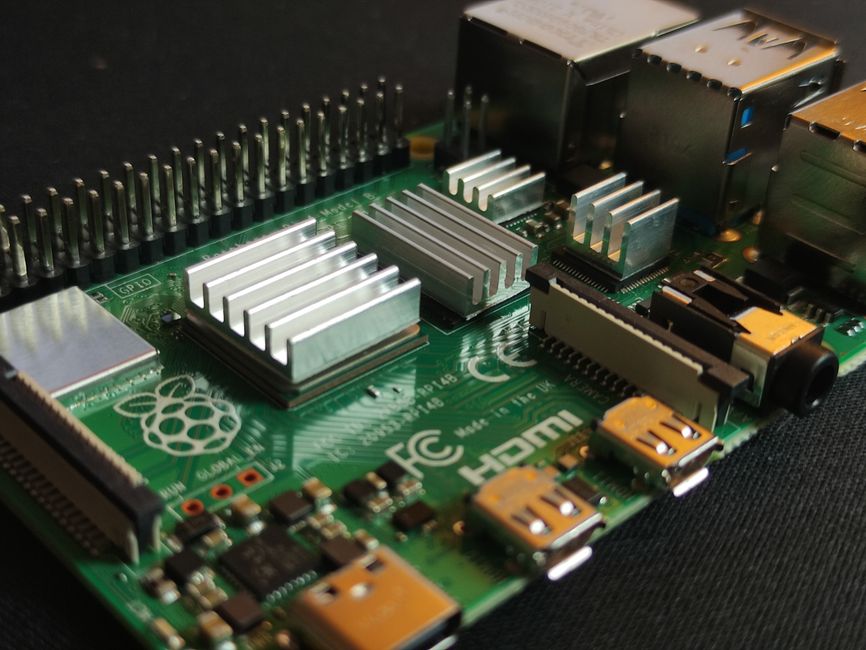
A Raspberry Pi board with heatsinks fitted, GPIO header along the left edge. The same hardware runs either tool, what differs is whether anything outside has to reach it.
Beyond reachability, the two build genuinely different things.
PiVPN is hub-and-spoke. Everything goes through the Pi. That is exactly what you want when the point is to be at home from elsewhere: browse from your home IP, reach the printer, use a service that only trusts your home address.
Tailscale is a mesh. Your laptop talks to your phone directly, whether or not the Pi is on. Nothing funnels through one box, so nothing breaks when that box reboots, and nothing routes through your home connection unless you ask it to.
Neither shape is better. They answer different sentences: "I want to be on my home network" versus "I want my machines to reach each other."
Start with Tailscale if you are unsure. It works everywhere, including the cases where PiVPN simply cannot, and adding a device takes seconds. For most people wanting to reach their own machines from outside, that is the whole job.
Choose PiVPN when the point is your home connection itself, appearing to be at home, or refusing any outside dependency. Both are legitimate reasons, and the second one is not paranoia: it is the difference between a network you operate and a network you subscribe to.
And if you want the mesh without the company, the middle path exists: run the control plane yourself with Headscale, compared with Tailscale here. You keep the official clients and the NAT traversal, and the part that knows about your devices stays on a machine you own.
What is the real difference between PiVPN and Tailscale?+
PiVPN is an installer script: it configures WireGuard or OpenVPN on your Raspberry Pi and leaves you with a classic VPN server that clients dial into. Tailscale is a mesh network with a coordination server run by Tailscale Inc.; your devices find each other through it and then talk directly. PiVPN gives you a front door into your home network. Tailscale gives every device a private address that works from anywhere, with no front door to open.
Can I use PiVPN if my ISP puts me behind CGNAT?+
No, and this is the constraint that settles most of these decisions before any feature comparison begins. PiVPN needs an inbound port reachable from the internet. Behind carrier-grade NAT you do not have a public address of your own, so there is nothing to forward a port to. Tailscale is built for exactly this case: both peers make outbound connections and are introduced by the coordination server. Check your router's WAN address first - if it starts with 100.64 to 100.127, you are behind CGNAT.
Which is more private?+
PiVPN, in the strict sense: nothing leaves your control. Tailscale's data plane is also end-to-end encrypted with WireGuard, so the company cannot read your traffic, but it does hold the coordination metadata - which devices exist, when they connect, from what addresses. If your objection is to any third party knowing your network's shape, PiVPN is the honest answer. If your objection is to anyone reading your data, both are fine.
Which one is easier to set up?+
Tailscale, by a wide margin, and it is not close. Install, log in, done - no port forwarding, no dynamic DNS, no certificate to distribute. PiVPN's script is well made and the install itself is quick, but the surrounding work is not: a static IP or DDNS, a port opened on the router, and a config file moved to each client by hand.
Does PiVPN still make sense in 2026?+
Yes, in two situations. When you want a genuine exit point at home - browsing the internet as if you were on your home connection, for a service that only trusts your home IP - a hub-and-spoke server does that naturally. And when you refuse any dependency on an outside company, PiVPN's whole value is that there is nothing to depend on.
Is there a middle path?+
Yes: run the coordination server yourself. Headscale is an open-source implementation of Tailscale's control plane, so you keep the mesh behaviour and the official clients while owning the part that knows about your devices. It costs more setup than Tailscale and less freedom from maintenance than PiVPN - the usual price of the middle.